Philosopher: RE
Religious Education at Alderbury & West Grimstead CE Primary School
As Philosophers at AWGS, children explore a rich range of religious and non‑religious world views through an enquiry‑led curriculum. We follow the Wiltshire Agreed Syllabus and use the Emmanuel Project as our core scheme of learning.
The Emmanuel Project provides a clear, structured and engaging approach to RE, built around big questions that help children investigate beliefs, values and ways of living. Its enquiry model encourages curiosity, critical thinking and personal reflection — all central to our vision for Being a Philosopher.
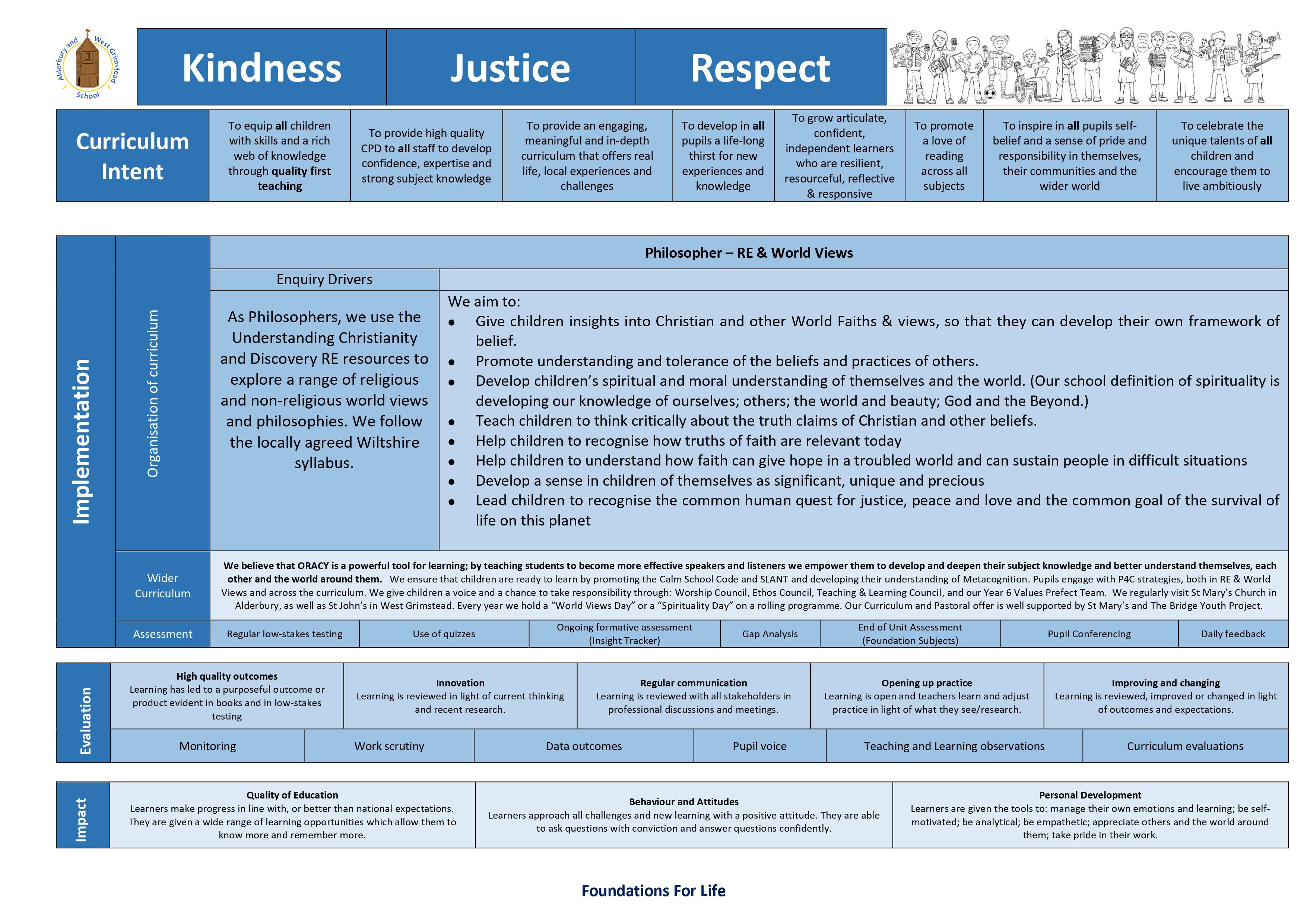
Our Aims in RE
Through our RE curriculum, we aim to:
-
Give children insights into Christianity and a wide range of world faiths and world views, enabling them to develop their own framework of belief
-
Promote understanding, respect and tolerance of the beliefs and practices of others
-
Develop children’s spiritual and moral understanding of themselves and the world
-
Our school definition of spirituality is: developing our knowledge of ourselves; others; the world and beauty; God and the Beyond
-
-
Teach children to think critically about different beliefs
-
Help children recognise how truths of faith are relevant today
-
Support children to understand how faith can offer hope in a troubled world and sustain people in difficult situations
-
Develop a sense of themselves as significant, unique and precious
-
Lead children to recognise the common human quest for justice, peace and love
How the Emmanuel Project Shapes Our RE
The Emmanuel Project is built around a series of enquiry questions such as:
-
Why do people pray?
-
What is the Trinity?
-
How do Hindus show commitment?
-
What does it mean to belong?
Each unit guides children through:
1. Engagement
Exploring the big question and connecting it to their own experiences.
2. Investigation
Learning about beliefs, practices, stories, artefacts and lived experiences from different faiths.
3. Evaluation
Thinking critically about what they have learned and considering different viewpoints.
4. Expression
Reflecting on their own ideas, values and beliefs in creative and meaningful ways.
This structure helps children make sense of belief, understand diversity and develop thoughtful, well‑reasoned responses.
How We Teach RE
Children learn through:
-
Enquiry‑based lessons
-
Discussion, debate and reflection
-
Handling artefacts and exploring sacred texts
-
Creative responses such as art, drama and writing
-
Encounters with visitors and real‑life stories
-
Making connections between beliefs, values and actions
Our aim is to help children think deeply, ask questions and understand the diverse world in which they live.